Blaise Pascal Book: Pensées "The two contrary reasons. One must begin there; without that, one understands nothing, and everything is heretical. And even at the end of each truth, it is necessary to add that one remembers the opposite truth." Painting by Mark Spain Translated from French Illustration by Laurent Guidali Www.Etoile.App
Articles
- Obtenir le lien
- X
- Autres applications
Blaise Pascal Book: Pensées "None other has known that man is the most excellent creature. Those who truly knew the reality of his excellence considered the natural self-esteem and ingratitude of humans as cowardice. Others, who recognized how effective this baseness is, ridiculed the natural feelings of grandeur in man as absurd pride. 'Lift your eyes to God,' say some; 'see the one you resemble, and who made you to worship. You can make yourself like Him; wisdom will make you equal if you choose to follow it.' And others say to him, 'Lower your eyes to the earth, pitiful worm that you are, and look at the beasts with which you share your existence.' What, then, will become of man? Will he be equal to God or to the beasts? What a terrifying distance! What will we become? Who does not see through all this that man is lost, that he can no longer find himself? And who will guide him? Even the greatest men have been unable to do so." Painting by Yuriy She...
- Obtenir le lien
- X
- Autres applications
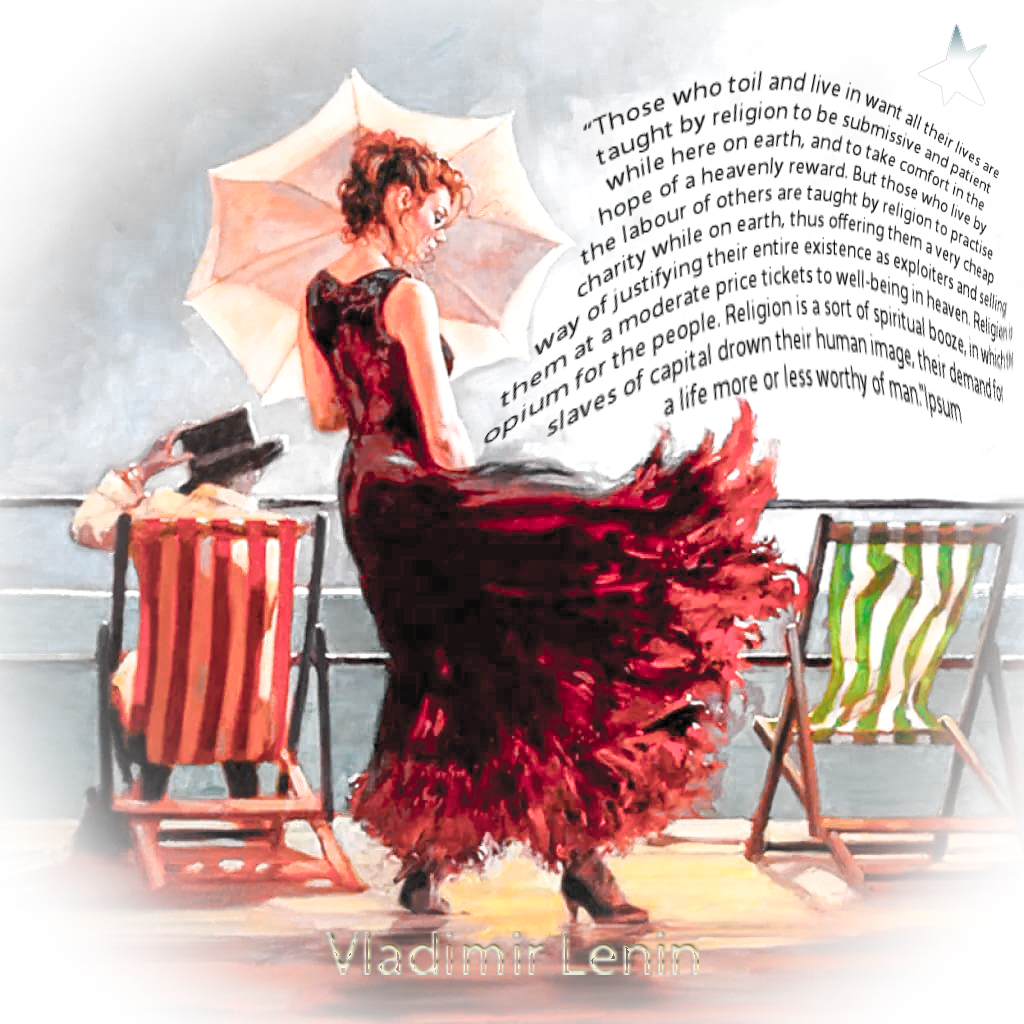
Vladimir Lenin Speaking of religion in Novaya Zhizn in 1905, alluded to Marx's earlier comments: “Those who toil and live in want all their lives are taught by religion to be submissive and patient while here on earth, and to take comfort in the hope of a heavenly reward. But those who live by the labour of others are taught by religion to practise charity while on earth, thus offering them a very cheap way of justifying their entire existence as exploiters and selling them at a moderate price tickets to well-being in heaven. Religion is opium for the people. Religion is a sort of spiritual booze, in which the slaves of capital drown their human image, their demand for a life more or less worthy of man." Let's break down the main points in the passage: Submission and Patience: The passage suggests that religion teaches those who face hardships and poverty to be submissive and patient in their earthly lives, promising them a reward in the afterlife. This could be interpret...
- Obtenir le lien
- X
- Autres applications
Farid ud-Din Attar Book: The Conference of the birds The thirty birds behold the Simorgh: “The souls of the thirty birds dissolve in shame. Then, their bodies turned to dust, they attained Life. Purged of all, detached, liberated, They were revitalized by the brilliance of His glory. The bond that linked them to the Supreme Being Was renewed; taking on a new life. They were amazed by new manners. All their past deeds and all their shortcomings Vanished forever, erased from their hearts. The radiant sun of Proximity Shone from afar and illuminated their beings. Then, in the reflection of the Simorgh of the worlds, They saw, luminous, the sovereign Face. They saw reflected thirty birds, the si morgh. They saw that Simorgh was none other than themselves." Farid al-Din Attar cleverly plays with the Persian word "Simorgh" by dividing it into "Si morgh," literally meaning "thirty birds." This ingenious duality explores the spiritual quest of the thirty bird...
- Obtenir le lien
- X
- Autres applications
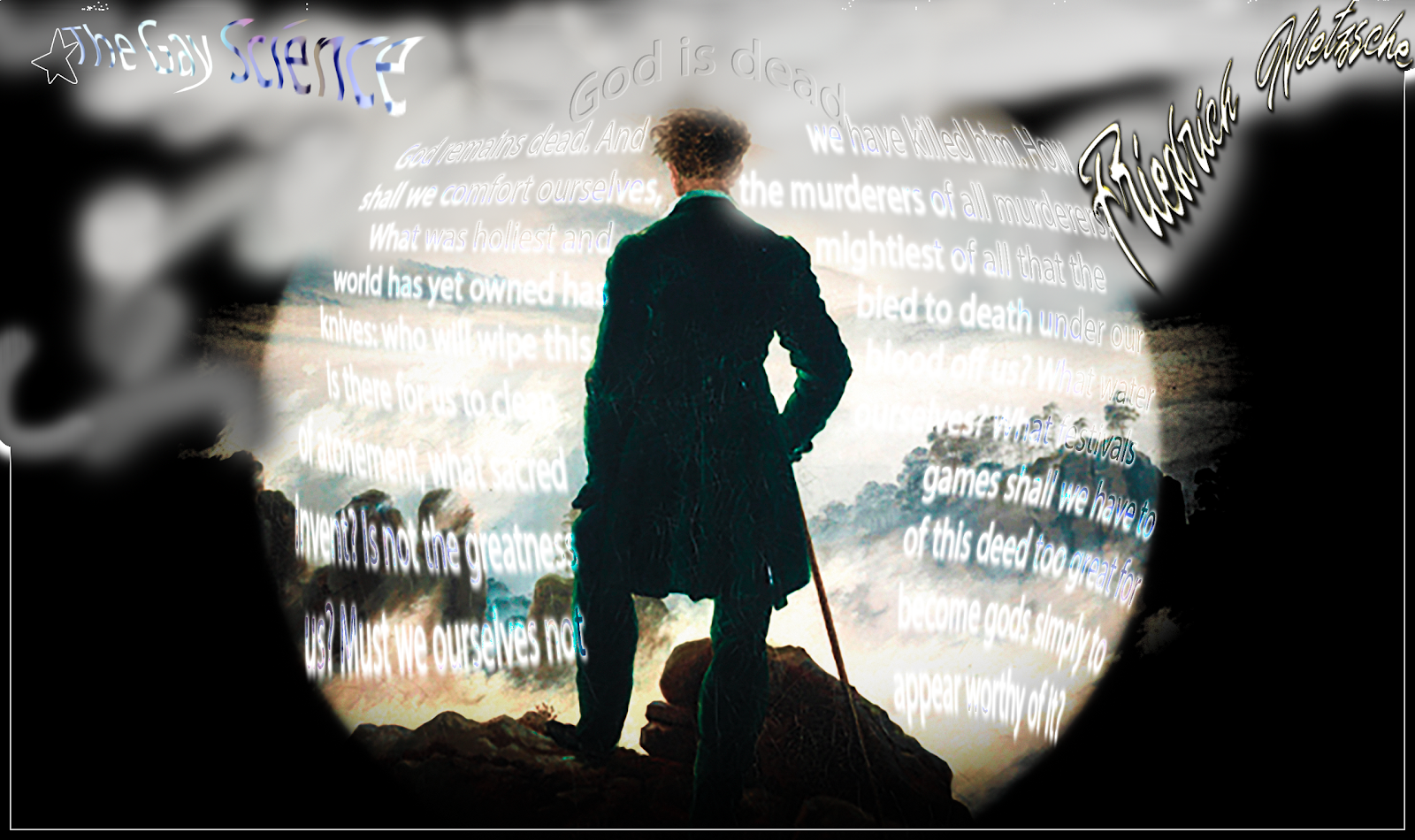
Friedrich Nietzsche Book: The Gay Science God is dead "God remains dead. And we have killed him. How shall we comfort ourselves, the murderers of all murderers? What was holiest and mightiest of all that the world has yet owned has bled to death under our knives: who will wipe this blood off us? What water is there for us to clean ourselves? What festivals of atonement, what sacred games shall we have to invent? Is not the greatness of this deed too great for us? Must we ourselves not become gods simply to appear worthy of it?" Nietzsche boldly declares, "God is dead. God remains dead. And we have killed him." This proclamation isn't a literal event but a metaphor for the waning influence of religious beliefs and the erosion of a transcendent moral foundation in Western society. The assertion "we have killed him" intimates that humanity, propelled by advances in science, philosophy, and critical thinking, has dismantled traditional religious authority....
- Obtenir le lien
- X
- Autres applications
The concept of the "will to power" “Is a central idea in the philosophy of Friedrich Nietzsche a 19th-century German thinker. This idea is particularly explored in his work "Thus Spoke Zarathustra" and other philosophical texts. The will to power is not a simple quest for physical power but rather a metaphysical force that governs the entirety of existence according to Nietzsche. Here are some key elements to understand the will to power in Nietzsche: 1. Definition The will to power is the fundamental force that animates all living beings. Nietzsche argues that this will is not merely a search for power over others but an inner force that drives each individual to develop, assert themselves, and fully express their nature. 2. Energetic Perspective: Nietzsche often describes the will to power in terms of energy. It is a creative, dynamic, and affirmative energy that seeks to manifest itself through different forms of existence. This energy is present in all human act...
- Obtenir le lien
- X
- Autres applications
Pleasure and Desire “In the intricate fabric of human existence, pleasure and desire emerge as intrinsically linked forces, crafting a subtle ballet within the depths of our behaviors and aspirations. Let's embark on a psychological odyssey, delving into how these two elements intertwine and shape our individual journey. Desire, like an internal compass, guides our actions towards forthcoming horizons. It transcends the simple quest for immediate satisfaction, presenting itself as a time architect. Each desire becomes a promise of deferred happiness, a deliberate anticipation that heralds a richer and deeper pleasure. Pleasure, on the other hand, is the fleeting dance of the moment. It is the immediate reward, the sense of well-being that floods our senses. However, it goes beyond a mere reaction. When enveloped by the elaborate anticipation of desire, pleasure transforms into a more meaningful celebration. It becomes a symphony of prolonged satisfactions, a delight savored through...